
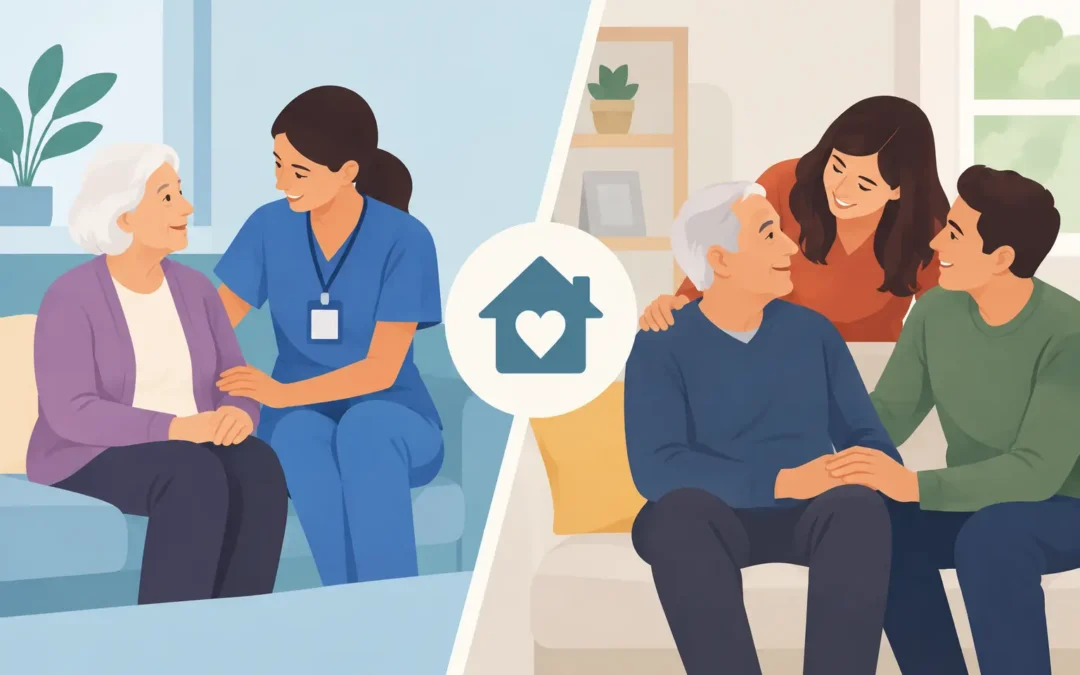
When a parent, partner or relative begins to need help at home, the question is rarely just practical. It can bring love, loyalty, worry and uncertainty into the same conversation. Home care versus family caregiving is not a choice between caring deeply and handing responsibility to someone else. It is about finding support that keeps the person safe, respected and connected to the life they want to live.
For some families, relatives can provide much of the help needed. For others, professional care is necessary from the start. Often, the most sustainable arrangement is a combination of both. The right decision depends on the person’s needs, the family’s capacity and how reliably care can be provided day after day.
What family caregiving can offer
Family members know the person behind the care needs. They understand familiar routines, favourite meals, personal history and the small changes in mood or behaviour that may not be obvious to somebody new. This relationship can be deeply reassuring, particularly when support is needed after an illness, a hospital stay or a difficult life change.
Family caregiving may involve collecting prescriptions, preparing meals, helping with shopping, attending appointments, managing household tasks or simply spending regular time together. Where the person needs low-level support and relatives live nearby, this can work well. It can also preserve a valued sense of normality and independence.
However, care needs can grow gradually. What begins as help with laundry or transport may become support with washing, dressing, continence care, medication prompts, mobility or overnight reassurance. These tasks require time, confidence and physical energy. They may also require specific training to be carried out safely and with dignity.
A relative who is trying to balance employment, children, their own health and care responsibilities can quickly become exhausted. The strain is not a sign that they do not care enough. It is often a sign that the arrangement needs more support.
Home care versus family caregiving: the practical differences
Professional home care brings structure and accountability to support at home. A trained care worker can visit at agreed times, follow an individual care plan and record relevant changes or concerns. This consistency can be particularly valuable where personal care, moving and handling, complex routines or regular medication support are involved.
Home care can be arranged around the level of support required. A person may need a short daily visit for personal care, several calls throughout the day, help with domestic tasks and meals, companionship for social activities, or live-in care for ongoing presence and reassurance. The aim is not to take over a person’s home or choices. It is to provide practical help in a way that protects dignity and supports independence.
Family care is often more flexible in timing, but it can be less predictable. A relative may be delayed at work, become unwell or need a break. Professional care is planned around agreed calls and responsibilities, with management oversight and arrangements to maintain continuity where possible. For families, that reliability can reduce the constant pressure of wondering who will be available tomorrow.
There is also an emotional difference. Supporting someone close to you with intimate personal care can feel uncomfortable for both people, even in a loving family. A professional carer can provide this assistance respectfully while allowing the relative to remain a son, daughter, spouse, sibling or friend rather than becoming the sole carer.
When family support may be enough
Family-led care can be a positive option when needs are relatively light, the person is safe when alone and relatives can help without compromising their own wellbeing. It may suit someone who mainly benefits from companionship, help with errands, meal preparation or occasional support after appointments.
It is still wise to think ahead. Ask whether support would continue if the main family carer had to work late, travel, take a holiday or manage their own health needs. Consider whether the person can safely get in and out of bed, use the bathroom, prepare food and respond in an emergency. These questions are not designed to create alarm. They help families recognise when informal support may no longer be sufficient.
A short period of professional help can also be useful without replacing family involvement. For example, a carer may assist with a morning routine while relatives take care of social visits, finances and appointments. This can make support more manageable before anyone reaches crisis point.
When professional home care becomes especially valuable
Home care should be considered when a person’s needs involve personal care, reduced mobility, memory difficulties, frequent falls, isolation or a condition that is becoming harder for relatives to manage. It can also be appropriate when family members live at a distance or when the main carer is becoming overwhelmed.
The need for support is not always medical. Someone may be physically able to manage but feel lonely, lose confidence leaving the house or struggle to keep on top of meals and household tasks. Regular companionship and help to take part in social activities can make a meaningful difference to wellbeing.
Professional care is particularly helpful where care must be delivered consistently. A missed meal, a rushed personal care routine or an unsupported transfer can have serious consequences. A well-managed provider uses properly recruited staff, relevant training, supervision and clear communication to reduce those risks.
For people who need extensive support, live-in care may offer an alternative to moving into residential care. It allows the person to remain in familiar surroundings while receiving help across the day and reassurance overnight, according to their needs and care plan.
Cost, capacity and the hidden pressure on families
Cost is understandably part of the decision. Families may compare the visible price of paid care with the assumption that family care is free. Yet unpaid caregiving can carry substantial hidden costs, including reduced working hours, missed opportunities, travel, disrupted sleep and declining physical or emotional health.
The most useful question is not simply, “Can we manage this ourselves?” It is, “Can we manage it safely and sustainably?” If providing care is leaving a relative anxious, resentful, injured or unable to meet their own responsibilities, bringing in support can protect the whole family.
Care needs and funding options vary, so it may be helpful to seek advice from the local authority about an adult social care assessment and a carer’s assessment. These can clarify needs, identify risks and help families understand what support may be available. A professional care provider can then discuss a practical service that reflects the person’s routine, preferences and required level of assistance.
Building a shared care arrangement
The strongest arrangements often treat home care and family involvement as partners rather than alternatives. Relatives continue to provide emotional connection, advocacy and familiarity. Care workers provide scheduled, trained support with daily tasks that may be difficult, intimate or time-consuming.
Clear communication is essential. Agree who will deal with appointments, shopping, medication collection, emergency contacts and updates from care workers. Make sure the person receiving care is included wherever possible. Their wishes about routines, food, privacy, faith, visitors and activities should shape the care they receive.
It is also helpful to review the arrangement regularly. A support plan that worked six months ago may no longer be enough after a fall, diagnosis, bereavement or change in mobility. Adjusting care early is usually calmer and safer than waiting for a difficult incident.
Choosing a home care provider with confidence
If professional support is needed, look beyond availability alone. Ask how staff are recruited and checked, what training they receive, how care plans are created and reviewed, and what happens if a regular carer is unavailable. You should also understand how concerns are reported, who manages the service locally and how the provider communicates with families.
A dependable provider should listen before recommending a service. Care should not feel like a fixed package imposed on a household. It should reflect the individual’s assessed needs, personality, routines and goals, whether that means support with personal care, domestic help, companionship, social activities or live-in assistance.
Fame24HourCare recognises that families need both compassion and dependable processes. Professionally managed home care can provide immediate practical help while giving relatives the breathing space to be present in the ways that matter most.
Choosing support is not a withdrawal from family responsibility. It can be a thoughtful act of care: one that protects a loved one’s dignity, gives relatives room to remain close, and makes everyday life at home more secure.