
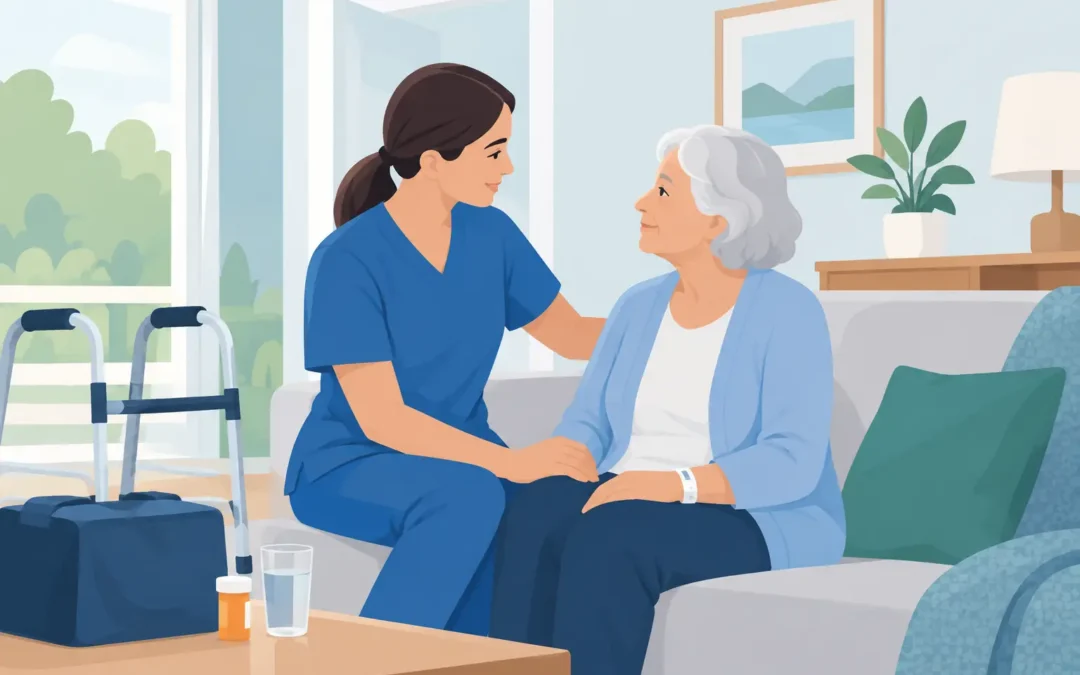
Leaving hospital can feel like a relief, but it can also be the point at which families realise how much support is needed. This guide to hospital discharge support explains how to prepare for a safer return home, protect a person’s dignity and reduce avoidable pressure on relatives during the first days and weeks.
A discharge should not simply mean that someone is medically ready to leave a ward. It should mean there is a realistic plan for managing everyday life at home. That plan may be straightforward after a minor procedure, or it may involve coordinated care for personal care, mobility, medicines, meals, appointments and emotional wellbeing.
What hospital discharge support should achieve
The purpose of discharge support is to help a person recover or live safely outside hospital while maintaining as much independence as possible. It should take account of the individual’s condition, their home environment, the people available to help and any existing care needs.
For some people, short-term assistance is enough. They may need help getting washed and dressed while they regain strength, support with shopping, or someone to accompany them to an appointment. Others may need ongoing domiciliary care, overnight reassurance or live-in support because their needs are more complex.
A good plan also recognises that recovery is not always predictable. Someone who seems confident in hospital may find stairs, bathing, preparing food or remembering medicines much harder once they are tired and back in familiar surroundings. Planning for that possibility is sensible, not a sign of failure.
Start planning before the day of discharge
Discharge arrangements are usually led by the hospital team, working with the patient and, where appropriate, family members, carers and community services. Ask early what is expected to happen and who is responsible for each part of the plan. Do not assume that a relative can provide care without discussing whether it is safe, practical and sustainable.
Useful questions include whether the person can move safely around the home, manage toileting, prepare food and drink, and take prescribed medicines correctly. It is also reasonable to ask what symptoms should prompt a call to a GP, NHS 111, the hospital team or emergency services.
If the person agrees, keep a written record of conversations and request a copy of the discharge information. This can help family members provide consistent support, particularly when several people are sharing responsibilities.
Check the home, not just the diagnosis
A clinical assessment does not always reveal the practical barriers waiting at home. Before discharge, consider the route from the front door to the bedroom and bathroom. Look for loose rugs, poor lighting, steep stairs, low seating, cluttered walkways and pets that may get underfoot.
Equipment may be recommended, such as a walking frame, raised toilet seat, shower chair or bed rail. It should be delivered, fitted and understood before it is relied upon. A piece of equipment is only helpful when the person knows how to use it safely and it suits their home.
Think about food as well. A person returning after illness may have a reduced appetite, special dietary requirements or limited energy for cooking. Preparing simple meals, arranging a food shop and ensuring drinks are within reach can make the first few days much safer.
Put care around the person’s daily routine
Hospital timetables are very different from life at home. Care works best when it is built around the individual’s usual preferences and essential routines, rather than expecting them to fit around a service.
A home care worker may support with washing, dressing, continence care, meal preparation, medication prompts, light domestic tasks and mobility. Companionship can be equally valuable when someone is anxious after a hospital stay or has lost confidence going outside. For a person needing more continuous assistance, live-in care may offer reassurance while allowing them to remain in their own home.
The right level of support depends on need. A short morning visit could be appropriate for someone who is otherwise independent. Someone at risk of falls, confusion or dehydration may need several visits across the day. Where care needs change quickly, regular reviews are essential rather than waiting for a crisis.
At Fame24HourCare, care planning focuses on the individual’s practical needs, preferences and safety at home. Trained care staff can provide reliable support that complements the discharge plan and keeps families informed through clear communication.
Be clear about medicines and follow-up care
Medicines are a common source of difficulty after discharge, especially when prescriptions have changed. Before leaving hospital, confirm what each medicine is for, the dose, the timing, how long it should be taken and whether any previous medicines should be stopped. Ask how the prescription will be obtained and whether the person can safely open packaging, read labels and remember doses.
A dosette box or reminder system may help, but it is not suitable for every situation. If a person is confused, has poor eyesight, swallowing difficulties or a history of missed doses, more direct support may be needed. Never ask a care worker to undertake a medication task that has not been properly assessed and agreed.
Write down every follow-up appointment, including who will arrange it and how the person will get there. Transport, mobility and the need for an escort should be considered in advance. Missing early follow-up can delay recovery or allow problems to worsen unnoticed.
Support relatives without relying on them beyond their capacity
Family members often want to help, but caring after discharge can be physically demanding and emotionally draining. It may involve lifting concerns, disturbed sleep, personal care, difficult medication routines or managing changes in mood and memory. Good intentions cannot remove those pressures.
Have an honest conversation about what each person can realistically do. One relative may manage shopping and appointments, while another checks in by phone. Professional carers can cover personal care and scheduled visits. This division of responsibility is often more dependable than expecting one person to manage everything alone.
It is also worth agreeing how information will be shared. A simple notebook in the home, with the person’s consent and appropriate confidentiality, can record meals, mobility, concerns and appointments. Families should still respect the adult’s choices wherever they have capacity to make them.
Know when the plan needs to change
The days after discharge are a period of adjustment. Watch for signs that the current arrangement is not enough: repeated falls or near-falls, increasing confusion, missed medicines, poor eating or drinking, worsening pain, breathlessness, a decline in personal hygiene, or a carer who is exhausted and unable to cope.
Not every concern requires an emergency response, but it should be acted on. Contact the appropriate health professional for clinical advice and request a review of care needs where necessary. Early action can prevent a small problem becoming a hospital readmission.
For healthcare organisations, reliable discharge support also depends on workforce continuity. Community teams, care homes and hospitals need appropriately trained staff who understand care plans, escalation procedures and documentation. Temporary staff should be properly vetted, inducted and matched to the setting so that urgent staffing gaps do not compromise safe transitions.
A practical checklist for the first 48 hours
During the first two days at home, focus on the essentials:
- Make sure prescribed medicines, food, drinks and key telephone numbers are easy to reach.
- Check that mobility aids and any recommended equipment are being used correctly.
- Confirm the first care visit, follow-up appointment and transport arrangements.
- Encourage rest, regular drinks and simple meals, while noting any new or worsening symptoms.
- Give the person time to explain what feels difficult, uncomfortable or worrying.
The most helpful discharge support is not about taking control away from someone. It is about putting the right help in place so they can recover, feel secure and continue living at home with confidence.