
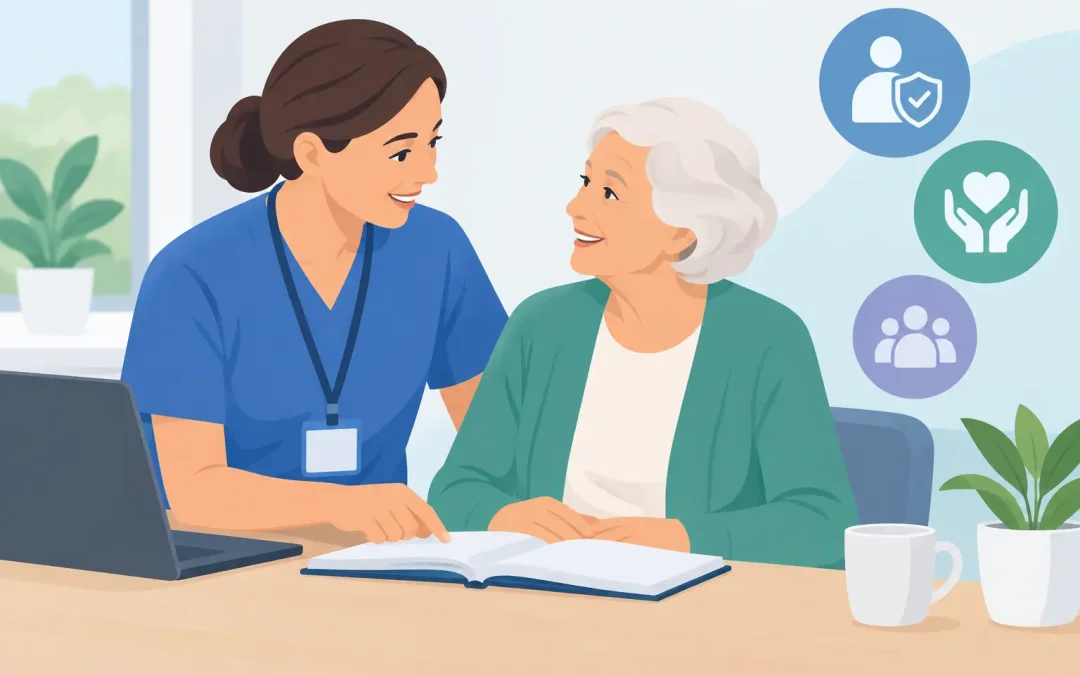
A carer may be the person helping someone wash, take medicines, prepare a meal or feel less alone at the end of a difficult day. That is why carer training is not simply a requirement to complete before a shift. It is the foundation for safe practice, respectful relationships and the confidence to respond calmly when a person’s needs change.
For families, good training provides reassurance that a loved one is being supported by someone who understands both the task and the person. For care providers and healthcare organisations, it helps protect service continuity, meet expected standards and create a workforce that knows when to act, record concerns and seek further support.
What effective carer training should achieve
Effective training gives carers the knowledge, practical skills and professional judgement to provide person-centred support. Person-centred care means recognising that two people with the same diagnosis, mobility needs or care plan may still want very different things from their daily routine. One person may value a quiet start to the morning, while another may want help getting ready for a social activity. Training should help staff listen, communicate clearly and respect those choices wherever it is safe to do so.
It should also make expectations clear. Carers need to understand the limits of their role, follow the agreed care plan and report changes rather than making assumptions. This matters particularly in home care, where staff may work independently, and in busy settings where temporary workers need to settle into established procedures quickly.
Competence is more than knowing the correct answer in a workbook. A well-trained carer can apply learning in a real situation: maintaining privacy during personal care, recognising a possible deterioration in health, handling a concern about medicines, or responding appropriately if a person becomes distressed. They can do this while remaining calm, respectful and accountable.
The core areas of carer training
The precise programme should reflect the role, the people being supported and the setting. A support worker in a mental health service, for example, may need different additional skills from a carer supporting an older person at home. However, a sound induction will normally address the essential areas of care practice.
Safeguarding is central. Staff must understand how to identify possible abuse, neglect, exploitation or unsafe practice, and how to report a concern without delay. Training should reinforce that safeguarding is everyone’s responsibility and that a concern should be taken seriously even when the facts are not yet fully known.
Training in dignity, equality and inclusion helps carers provide care without judgement. This includes respecting cultural preferences, faith, gender identity, communication needs and personal routines. It also means avoiding language or behaviour that takes control away from the person receiving support.
Health and safety learning covers practical risks, including infection prevention and control, safe moving and handling, fire safety, food hygiene where relevant, and the correct use of equipment. These subjects protect both the individual and the worker. A manual handling course, for instance, is not a substitute for assessing the specific person, environment and equipment involved in a transfer.
Medication training is equally important, but it must be appropriate to the duties being undertaken. Carers should know their organisation’s medication policy, how to record administration accurately, what to do if a dose is missed or refused, and when to seek clinical advice. Some tasks require additional competency assessment or delegation by an appropriate healthcare professional.
Other essential areas commonly include mental capacity, consent, confidentiality, record keeping, first aid awareness, communication, nutrition and hydration, and recognising changes in physical or emotional wellbeing. Training on dementia, end-of-life care, autism or mental health may be needed where these needs are part of the service.
Why classroom learning alone is not enough
Online modules and classroom sessions have an important place. They can provide consistent information, test understanding and ensure staff know policies. But care is practical, personal work. A carer also needs observation, supervised practice and feedback before being signed off as competent for particular tasks.
Consider personal care. The technical elements matter, including infection control and safe positioning. Yet the quality of the experience often rests on quieter skills: explaining what will happen, offering choices, protecting modesty, noticing discomfort and allowing enough time for the person to retain as much independence as possible.
The same applies to communication. A carer may have completed training on communication needs, but still require support to learn how a particular person expresses pain, anxiety or a wish to be left alone. Continuity, handovers and accurate care notes turn this knowledge into dependable day-to-day care.
For providers, competency assessments should be documented and reviewed. If an employee has not recently carried out a specialist task, has returned after a long absence or is supporting someone with newly complex needs, refresher training and supervision may be necessary. The safest answer is not always more generic training. Sometimes it is focused coaching around a specific care plan.
Training protects dignity as well as safety
When people think about training, they often picture mandatory certificates. Those matter, but training also determines whether care feels respectful. A rushed worker can unintentionally make a person feel like a task on a schedule. A trained and supported carer understands that privacy, choice and unhurried communication are part of safe care, not optional extras.
This is particularly significant when someone needs help with intimate care, continence support, eating, mobility or medication. These moments can leave a person feeling exposed or frustrated by the loss of independence. A skilled carer asks permission, explains each step, encourages what the person can do for themselves and responds sensitively if they are embarrassed or upset.
Training also supports professional boundaries. Warmth and companionship are valuable, especially for people living alone, but carers must not take advantage of a person’s trust or become involved in decisions outside their role. Clear boundaries protect everyone and make relationships more secure.
What families can ask a care provider
Families do not need to be experts in care standards to ask useful questions. A provider should be able to explain how it recruits, checks, inducts and supervises staff, and how it matches a carer’s skills to the care required.
It is reasonable to ask whether carers receive ongoing updates rather than one-off induction training, how competencies are assessed for tasks such as medicines or moving and handling, and what happens if a carer notices a change in health. Families may also want to know how concerns are handled, who is available outside standard office hours and how care plans are reviewed.
The answers should be clear rather than overly technical. Good providers recognise that families are seeking practical reassurance: will the carer understand the plan, treat their relative with respect and know what to do if something does not seem right?
What healthcare organisations should look for
Hospitals, care homes, hospices, GP practices and specialist services face a related challenge. They may need additional staff at short notice, but rapid deployment must not mean lowering standards. Temporary personnel need relevant experience, appropriate checks, current training and a clear understanding of their responsibilities.
Before a worker starts, the supplying agency and receiving organisation should be clear about the role, required competencies, shift expectations and any local induction requirements. A healthcare assistant may be experienced and well trained, but still need orientation to a new ward, documentation process, escalation route or infection control procedure.
Managers should also consider whether the worker’s training genuinely matches the needs of the shift. A general support worker may be appropriate for companionship and routine support but not for a role involving clinical duties beyond their competence. Clear communication prevents unsafe assumptions and helps temporary staff contribute effectively from the outset.
Fame24HourCare approaches staff development as an ongoing responsibility, combining careful recruitment, training updates and supervision with a focus on safe, responsive care. This supports both people receiving care at home and organisations working to maintain reliable staffing.
Training must keep pace with changing needs
Care needs are rarely fixed. A person recovering from surgery may regain independence. Someone living with dementia may need a different communication approach over time. A new medication, a fall, a change in appetite or increasing loneliness can all affect the support required.
Regular reviews give carers and managers an opportunity to identify gaps in knowledge or confidence before they become problems. Supervision is valuable here because it creates space to discuss difficult situations, reflect on practice and agree practical next steps. It should not be treated solely as a performance process.
There is also a balance to strike. Excessive paperwork can take attention away from people, while poor records make it harder to coordinate care safely. Effective training helps staff understand that concise, timely documentation is part of caring well. It preserves important information for colleagues, professionals and the individual themselves.
A caring manner cannot be reduced to a certificate, but training gives that care a safe and dependable structure. When carers are properly prepared, supervised and supported to keep learning, people are more likely to feel heard, secure and respected in the place where they live or receive care.