
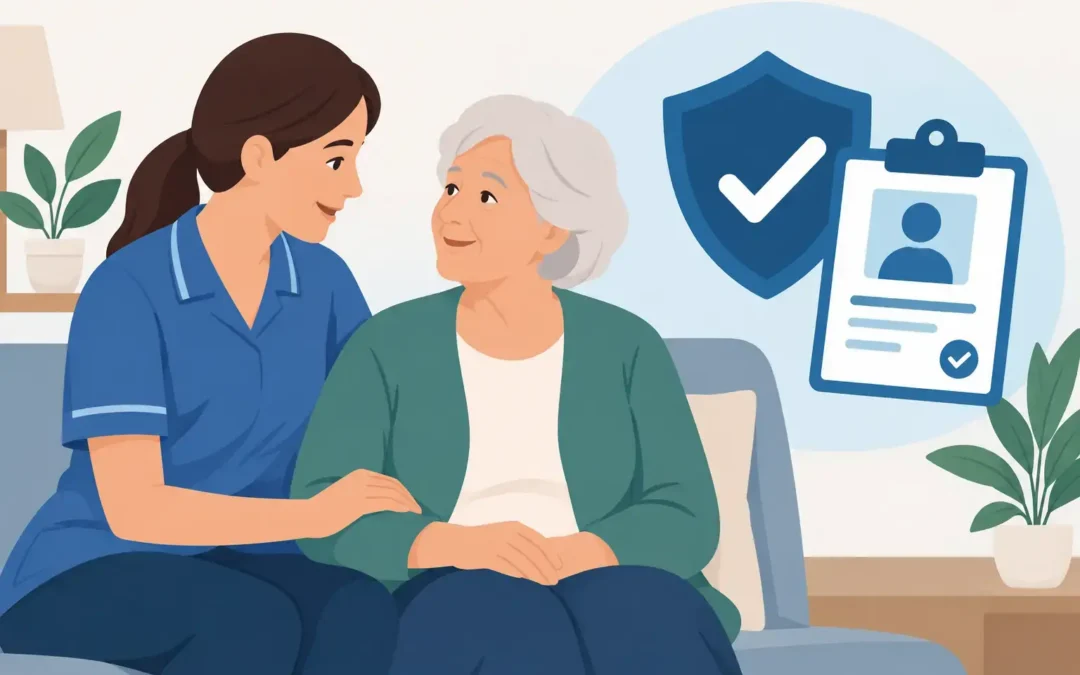
Choosing somebody to provide care at home means placing trust in them at a very personal level. They may help with washing, dressing, medication, meals, mobility or day-to-day companionship. It is therefore natural for families and care organisations to ask: do carers need DBS checks?
For many care roles, the answer is yes. However, the correct type of check depends on the duties involved, the setting and whether the person is working with adults in regulated activity. A DBS certificate is an essential safeguard, but it is only one part of safe recruitment and ongoing quality assurance.
Do carers need DBS checks in the UK?
Carers who provide personal care or health care to adults are commonly eligible for an Enhanced DBS check. Where their work amounts to regulated activity with adults, an Enhanced DBS check with a check of the adults’ barred list will usually be required.
Regulated activity is a legal term. In broad terms, it covers certain close-contact care and support provided to adults because of their age, illness or disability. This can include helping someone with washing, dressing, eating, drinking, toileting, managing medication or personal finances. It may also cover healthcare provided by, or under the direction or supervision of, a healthcare professional.
A barred-list check helps an employer establish whether a person is barred from working with adults. Knowingly allowing someone who is barred to undertake regulated activity is a serious matter. Equally, an employer must only request the level of DBS check that the role is legally eligible for.
This means there is no single rule for every person described as a carer. A live-in carer supporting an adult with intimate personal care will usually need a different level of vetting from someone who provides occasional domestic cleaning or social companionship without personal-care duties.
The DBS check level depends on the role
The Disclosure and Barring Service offers different levels of criminal record check. Understanding the distinction helps families and providers ask the right questions without assuming that every certificate means exactly the same thing.
A Basic DBS check shows unspent convictions and conditional cautions. It can be requested for any role, including by an individual applying for themselves. It may be appropriate where a role is not eligible for a higher-level check, but it does not include barred-list information.
A Standard DBS check includes spent and unspent convictions, cautions, reprimands and warnings, subject to filtering rules. It is available only for certain occupations and positions specified in legislation.
An Enhanced DBS check includes the information available at Standard level and may also include relevant local police information. For eligible care positions involving adults, it can be requested with an adults’ barred-list check. This is the level most families would expect a regulated domiciliary care provider to obtain for staff delivering personal care.
The job description matters more than the job title. For example, a support worker who accompanies an adult to appointments and provides personal care may be eligible for an Enhanced DBS check with barred-list information. A companion who only visits for conversation, light shopping and social activities may not be eligible for the same check, depending on the exact arrangement and frequency of contact.
What this means for home care clients and families
If you are arranging care for yourself or somebody close to you, ask direct questions before care starts. A trustworthy provider should be able to explain what checks have been completed, why they are appropriate for the role, and how the information has been assessed.
For personal care, it is reasonable to expect confirmation that carers have had an appropriate Enhanced DBS check before working alone with clients, unless there is a carefully managed and lawful exception. Providers must also consider any information disclosed fairly, individually and in line with their safeguarding responsibilities. A DBS certificate is not simply a pass or fail document. The relevance, nature, age and circumstances of any disclosure must be considered alongside the role.
Families should also remember that a certificate has a date. DBS checks do not automatically provide ongoing notifications of new information after they are issued. A provider should therefore have a clear policy for rechecks, declarations, supervision and responding to safeguarding concerns.
At Fame24HourCare, safer recruitment is treated as part of delivering respectful, dependable support, not as a paperwork exercise. The aim is to give clients confidence that the person entering their home has been properly screened, trained and supported for the work they will do.
DBS checks are one part of safer recruitment
A DBS check is valuable, but it cannot show whether a carer has the practical skills, patience and judgement required to support someone well. Good care providers use several safeguards together.
These should include verifying identity and right to work, checking a full employment history, obtaining suitable references, confirming relevant qualifications and registration where applicable, and assessing a candidate’s experience through interview and role-specific checks. For applicants who have lived or worked overseas, an overseas criminal record check or certificate of good conduct may also be needed, depending on the country and time spent abroad.
Training and supervision matter just as much after recruitment. Carers need clear guidance on safeguarding adults, infection prevention and control, medication support, moving and handling, confidentiality, mental capacity and consent. They also need a manager they can contact when a client’s needs change or a concern arises.
For healthcare staffing, organisations should make sure agency workers are vetted for the particular duties and setting involved. A nurse placed in a care home, a healthcare assistant on a ward and a support worker in a community service may all need different competency checks, inductions and supervision arrangements, even if each has an appropriate DBS certificate.
When a carer may not need an Enhanced DBS check
Not every arrangement falls within regulated activity or qualifies for an Enhanced DBS check. This is particularly relevant when an adult employs someone directly for limited help at home.
A person who carries out domestic tasks such as cleaning, gardening, meal preparation or shopping may not be eligible for an Enhanced check if they do not provide personal care or regulated activity. The same can apply to a companion whose role is primarily social and does not involve intimate care, healthcare or other qualifying responsibilities.
That does not mean safety should be overlooked. Direct employers can still ask an individual to obtain a Basic DBS check, take up references, verify identity and discuss relevant experience. They should set clear boundaries around the role, keep emergency contact details, and avoid asking a person to take on duties for which they are neither trained nor insured.
Eligibility rules can be detailed, especially where support includes a mix of companionship, domestic help and personal care. If duties change over time, the DBS level and other safeguards should be reviewed rather than assumed to remain suitable.
Checks for agency and temporary care staff
Care homes, hospitals, hospices, GP practices and other services using temporary staff remain responsible for ensuring workers are suitable for their placement. Before a shift begins, the receiving organisation should be satisfied that the agency has completed the necessary recruitment, DBS, right-to-work, reference and training checks.
Clear communication is essential. The agency needs an accurate description of the role, including whether it involves regulated activity, personal care, medication, clinical work, lone working or specialist support. The care setting should receive confirmation of compliance and should provide a local induction, explain reporting routes and ensure the worker understands the needs of the people they will support.
A DBS certificate through the Update Service can make status checks simpler where the certificate is at the right level and for the same workforce and role type. It should not be treated as a substitute for checking identity, confirming role eligibility or completing a proper induction.
Questions worth asking a care provider
When comparing home care providers or staffing agencies, ask whether carers are checked before being assigned, what DBS level is used for the role, and how often checks are reviewed. It is also helpful to ask about references, training, supervision, safeguarding procedures and what happens if you raise a concern.
A professional provider will answer plainly. They should not promise that a DBS check removes all risk, because no single check can do that. Instead, they should show how careful recruitment, responsive management and regular oversight work together to protect people receiving care.
The right carer brings more than a certificate. They bring skill, kindness, reliability and respect for the person’s home and choices. Proper DBS checks help establish a safer starting point, while good communication and accountable care management help that trust grow with every visit.