
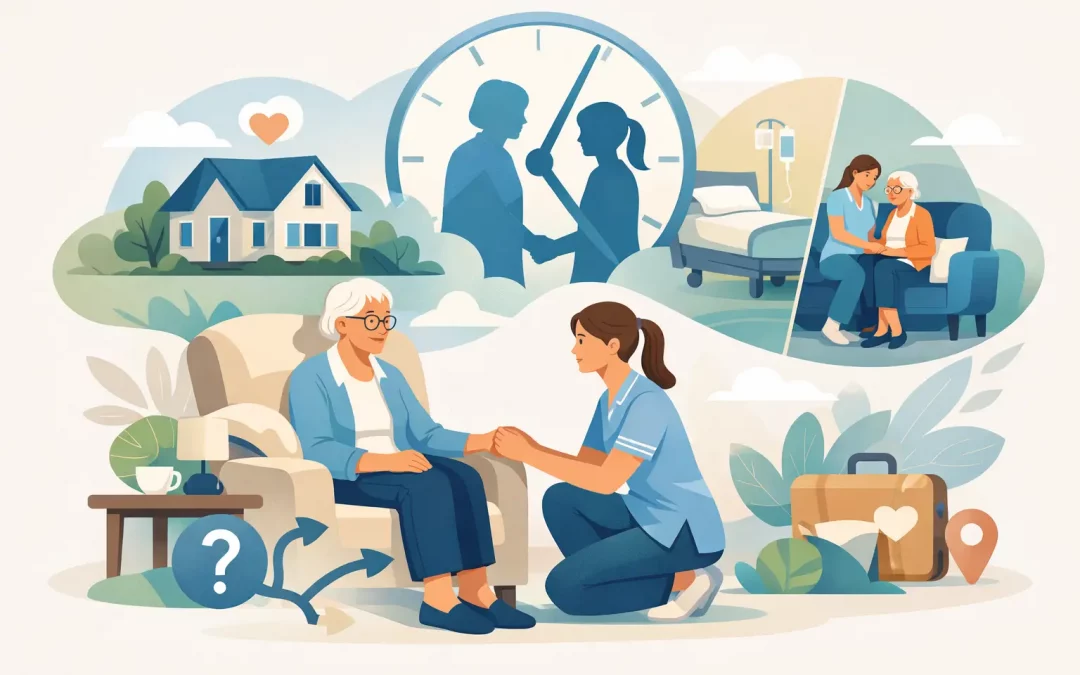
A fall in the night, missed medication, an empty fridge, or a parent sounding unusually confused on the phone – these are often the moments when families start asking when should you arrange live-in care. The question rarely appears out of nowhere. More often, it comes after months of small concerns that are becoming harder to explain away.
Live-in care can be the right step when someone needs consistent support but wants to remain in their own home. It offers help with personal care, meals, medication routines, mobility, companionship, and day-to-day safety, without the disruption of moving into residential care. The right timing, however, depends on the person, their health, their wishes, and how safely they are managing now.
When should you arrange live-in care for a loved one?
The clearest answer is this: you should arrange live-in care when staying at home is still the preferred option, but managing safely alone is no longer realistic.
That point looks different for every family. For one person, it may follow a hospital discharge when recovery at home will require regular support. For another, it may be a gradual decline linked to dementia, frailty, reduced mobility, or a long-term condition. In some cases, relatives are providing most of the care already and are reaching physical or emotional exhaustion.
Waiting for a full crisis can narrow your options. If the family only starts planning after a serious fall, an emergency admission, or a breakdown in informal care, decisions often have to be made quickly and under pressure. Arranging support earlier gives more time to assess needs properly, discuss preferences, and build a care plan that feels stable rather than reactive.
Signs that live-in care may be needed
The first signs are often practical rather than dramatic. Someone who was once independent may begin struggling with washing, dressing, preparing meals, or keeping the home clean and safe. You might notice unpaid bills, food going off, washing left undone, or medication being taken incorrectly.
Changes in mobility are another common reason families start considering live-in care. If moving around the house has become difficult, stairs are a challenge, or there is a growing risk of falls, occasional visits may no longer be enough. The issue is not only whether a person can complete a task, but whether they can do it safely, consistently, and with dignity.
Memory problems can also shift the balance. A person living with dementia may forget to eat, leave the gas on, wander, or become confused about time and place. In the early stages, some support can be managed with short care visits and family help. As confusion increases, the need for ongoing supervision and reassurance often becomes greater.
There is also the emotional side. Isolation, anxiety, and loneliness can have a serious impact on health and wellbeing. If someone is spending most days alone, losing confidence, or withdrawing from normal routines, live-in care can offer both practical help and steady companionship.
After hospital discharge or a health setback
One of the most common answers to when should you arrange live-in care is after a major change in health. This could be surgery, a stroke, a fracture, illness, or a period of hospital treatment that leaves someone weaker than before.
The person may be medically fit to leave hospital but not fully ready to cope alone at home. They might need support getting in and out of bed, washing, preparing meals, taking medicines at the right times, or attending follow-up appointments. In this situation, live-in care can reduce risk during recovery and prevent avoidable readmission.
Sometimes this support is temporary. A few weeks of live-in care may be enough to help someone regain strength and confidence. In other cases, a health event reveals longer-term needs that were already developing. What matters is assessing the current reality honestly rather than focusing only on how things used to be.
When family carers can no longer do it alone
Many live-in care arrangements begin because relatives have been covering more and more support without recognising how unsustainable it has become. What starts as shopping and checking in can gradually turn into daily personal care, medication prompts, overnight calls, and constant worry.
Families often carry this responsibility out of love and commitment, but there is a limit to what is reasonable. If a spouse is elderly, if adult children are juggling work and children of their own, or if caring is affecting sleep, health, or finances, extra support may be necessary. That is not a failure. It is often the step that protects both the person receiving care and the person giving it.
Live-in care can restore some balance. Relatives remain involved, but they are no longer expected to carry the whole burden alone. That can improve relationships as well as outcomes.
Is live-in care better than residential care?
It depends on the person and the level of need. For many people, live-in care is appealing because it allows them to stay in familiar surroundings, keep their routines, and remain close to neighbours, pets, and personal possessions. That familiarity can be especially valuable for people living with dementia or those who feel distressed by change.
There are practical benefits too. Care is one-to-one and shaped around the individual rather than around a communal schedule. Mealtimes, bedtime, personal routines, and activities can all be more personalised.
That said, live-in care is not the right fit in every case. If someone needs constant nursing intervention, has very complex clinical needs, or requires a building designed specifically for intensive supervision, another setting may be more suitable. The decision should be based on assessed needs, safety, and quality of life rather than a simple preference for one model over another.
What to consider before arranging care
Before putting live-in care in place, it helps to look at the whole picture. Start with what support the person needs across a full day and night. Are there difficulties with personal care, continence, mobility, eating, medication, memory, or behaviour? Are there risks linked to falls, confusion, or being left alone?
It is also important to consider the home environment. A person may wish to stay at home, but the property may need adjustments such as safer access, better lighting, or equipment to support moving and handling. Good care planning should account for the setting as well as the person.
Equally, think about personality and preferences. Live-in care means sharing the home environment with a professional carer, so compatibility matters. Daily routines, communication style, cultural preferences, and the level of independence the person wants to retain should all be respected.
Choosing a regulated provider is essential. Families should expect proper recruitment checks, training, supervision, and clear communication. A dependable service should be able to explain how care is monitored, how concerns are escalated, and how cover is managed if staff availability changes. This is where a provider such as Fame24HourCare can offer reassurance through responsive service, trained staff, and a structured approach to quality and compliance.
The best time is often before it feels urgent
A common mistake is assuming live-in care should only be arranged when a situation becomes unmanageable. In reality, the best time is often slightly earlier – when needs are increasing, risks are becoming clearer, and the person can still take part in decisions about their care.
Early planning gives everyone more control. The person receiving care can express what matters to them. Families can ask questions without panic. Providers can assess needs properly and put the right support in place from the start rather than rushing to patch together an emergency solution.
There is also a human benefit to acting earlier. Starting care before complete exhaustion or crisis can make the transition gentler. It allows trust to build and routines to settle, which often leads to a better experience for everyone involved.
If you are already asking the question, it is worth taking seriously. Families are usually not considering live-in care without reason. A careful conversation now can prevent a more difficult situation later, and it can help someone stay safe, respected, and comfortable in the place they know best.