
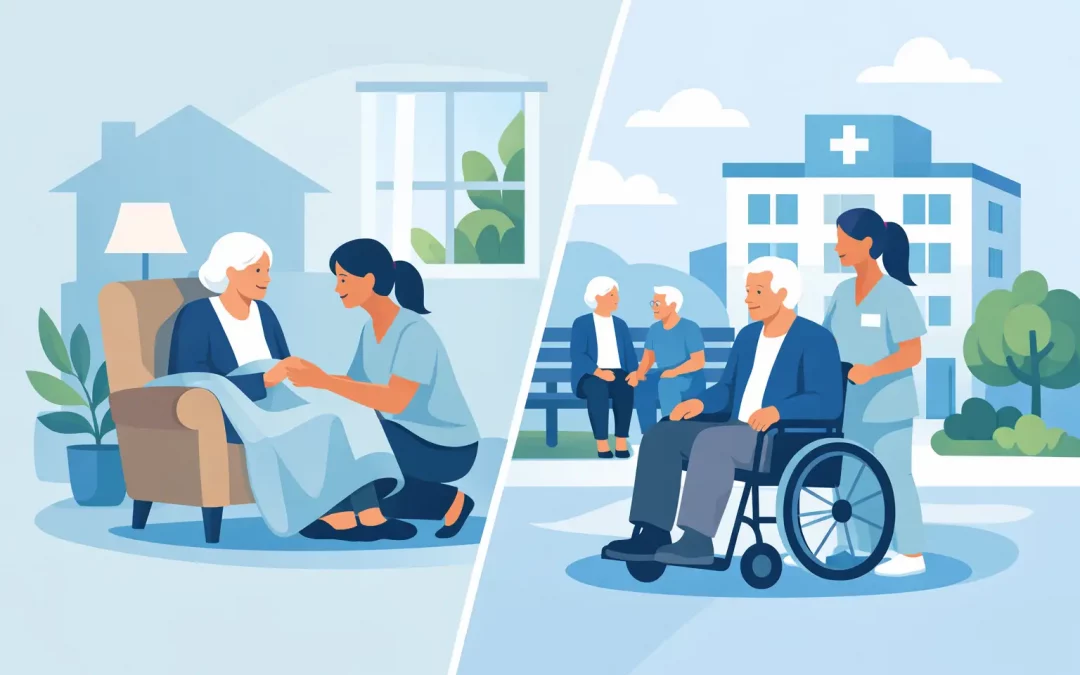
A fall, a hospital discharge or a gradual decline in confidence can make a family ask the same difficult question: live in care vs nursing home – which will genuinely give their loved one the safest, happiest support? The answer is rarely found by comparing brochures alone. It depends on the person’s health needs, home environment, relationships and wishes for everyday life.
Both options can provide valuable, professional care. The right choice is the one that protects dignity while meeting needs reliably, including on difficult days as well as good ones.
Live in care vs nursing home: the main difference
Live-in care brings a trained carer into an adult’s own home to provide ongoing, personalised support. The arrangement allows the person to remain in familiar surroundings, with help shaped around their normal routines. This may include personal care, meal preparation, medication prompts or administration where appropriate, mobility support, companionship, household tasks and help attending appointments or social activities.
A nursing home is a residential setting for people who need regular nursing care, usually available around the clock. Residents have their own room or space within a shared care environment, with meals, care and activities organised by the home. Nurses and care staff work as a team, supporting several residents during each shift.
Neither setting is automatically better. The key distinction is that live-in care is built around one person in their own home, while a nursing home provides care within a communal, clinical setting.
When live-in care may be the better fit
For many people, home is more than an address. It is where they know where everything is, recognise their neighbours and can choose when to get up, eat or spend time quietly. Remaining there can be especially reassuring for someone living with dementia, reduced mobility, anxiety or a long-term condition.
A live-in carer can offer continuity that is difficult to reproduce in a larger setting. Rather than adapting to a home’s timetable, care can be planned around the individual. If someone enjoys a cup of tea in the garden each morning, prefers familiar meals or has a much-loved pet, those details can remain part of daily life.
Live-in care can also support couples who want to stay together where their needs can be safely managed at home. Family and friends may visit more freely, without the feeling that they are entering an institution. For an adult who values privacy and independence, this can make a substantial emotional difference.
However, “live-in” does not mean one carer works actively for 24 hours without rest. A safe service plans for the carer’s breaks, sleeping arrangements, time off and handovers. If a person needs frequent night-time intervention, two-person moving and handling, or continuous clinical monitoring, the care package must be assessed carefully. Additional staff or a different setting may be required.
Care at home still needs the right environment
A home needs to be suitable for safe care. This may involve an assessment of stairs, bathrooms, access, moving and handling equipment, fire safety and space for the carer to sleep. Adaptations such as grab rails, a stairlift or a profiling bed can sometimes make home care practical, but they will not solve every challenge.
Families should also be realistic about who will coordinate decisions. A well-managed provider will set out a care plan, risk assessments, emergency arrangements and regular reviews. Clear communication matters, particularly when health needs change quickly.
When a nursing home may be the safer choice
A nursing home may be more suitable when nursing oversight and immediate access to a wider staff team are needed day and night. This can include people with complex medical needs, unstable health conditions, advanced frailty, significant mobility risks or care requirements that are no longer manageable in a domestic setting.
The shared environment can also be positive for someone who enjoys company and structured activities. Homes may offer communal dining, entertainment, group events and regular contact with other residents. For a person who has become isolated at home, this social aspect can be meaningful.
Nursing homes have established facilities and processes for clinical care, medication management, continence care, nutrition and emergencies. The presence of several staff members can be reassuring where needs are intensive or unpredictable. Families may also feel relief from the pressure of managing a property, arranging rotas and responding to crises.
There are trade-offs. A new environment can be disorientating, particularly after a hospital stay or for someone with dementia. Residents need to fit, at least in part, around the home’s routines. Staffing continuity may vary between shifts, and personal attention is shared among residents. Before choosing a home, families should ask how it manages individual preferences, night-time needs, falls, medical appointments and communication with relatives.
Comparing cost, flexibility and continuity
Cost is an essential part of the decision, but it should be compared on a like-for-like basis. Nursing home fees generally cover accommodation, meals, care and facilities. Live-in care costs cover the care service but the person continues to pay household costs, food and property expenses. For couples, live-in care can sometimes represent better value than two separate residential placements, although this depends on the level of support required.
Funding can be complex. A needs assessment from the local authority may identify eligible support, while some people may qualify for NHS Continuing Healthcare if their primary needs are health-related. Others fund care privately. Independent financial advice can help families understand the likely long-term position before making a commitment.
Flexibility is another consideration. Live-in care can increase gradually, from companionship and personal care to more intensive support, provided the home remains safe and staffing can meet the person’s needs. In a nursing home, care is delivered within the service’s existing structure, which can be highly effective but may offer less day-to-day choice.
Continuity should be assessed in both settings. Ask a live-in care provider how carers are matched, supervised and replaced during leave or illness. Ask a nursing home about staff turnover, the ratio of nurses and carers on each shift, and how residents’ changing needs are reviewed. A regulated provider should be able to answer these questions clearly and explain its recruitment checks, training and quality processes.
Questions that lead to a better decision
Start with the person, not the service. What matters most to them: staying near family, keeping a pet, feeling part of a community, having nursing staff close by, or avoiding disruption? Where possible, involve them in conversations early, even if relatives are helping with practical decisions.
Then consider what support is needed at different times, not just during a typical day. Is assistance needed overnight? Are there frequent falls, confusion, medication changes or behavioural needs? Can the home be adapted safely? Are relatives able to remain involved without becoming overwhelmed?
It is also sensible to visit a nursing home more than once, including at different times of day, and to request a detailed assessment for live-in care. Notice whether staff speak respectfully to people, whether care plans feel individual and whether questions are answered directly. Trust is built through evidence, not reassurance alone.
Choosing care that respects the person
The decision does not need to be framed as home being loving and residential care being a failure, or the other way around. A nursing home can provide skilled, secure care when needs are complex. Live-in care can provide stability, familiarity and one-to-one attention when home remains the right place to live.
At Fame24HourCare, care planning begins with listening to the person and those close to them, then matching support to real needs and reviewing it as circumstances change. A calm, honest assessment can turn an overwhelming choice into a practical plan that keeps safety, dignity and everyday quality of life at its centre.