
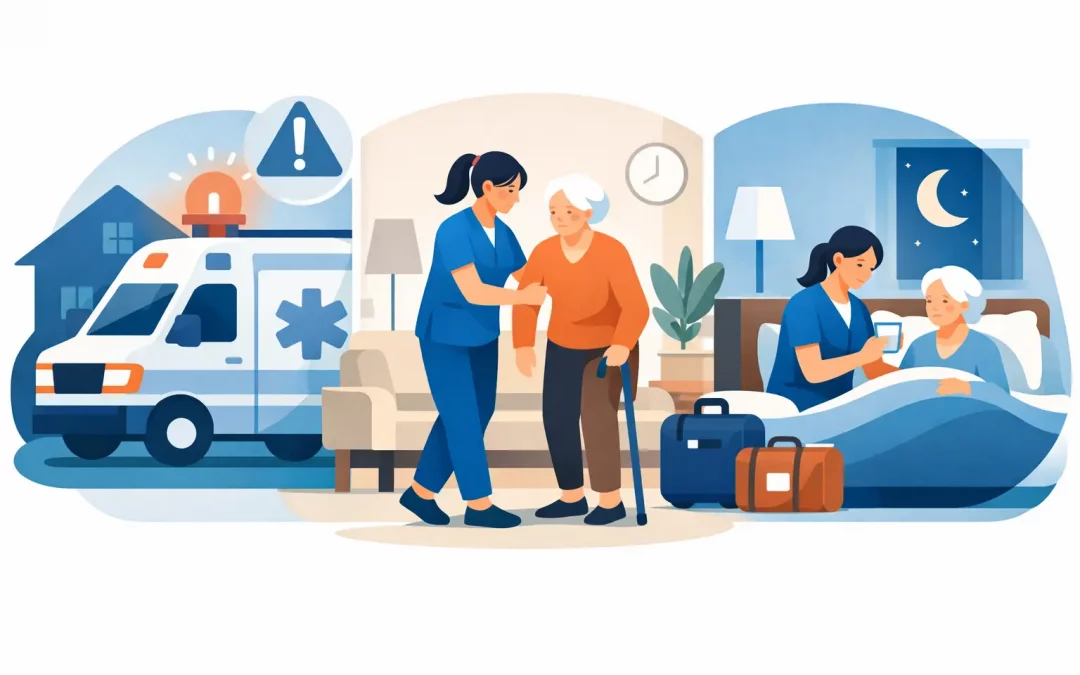
A hospital discharge call at 4pm can change the whole week. So can a fall, a sudden illness, or the moment a family carer realises they cannot safely manage another night alone. In situations like these, emergency live in care can provide urgent, practical support at home without forcing a rushed move into residential care.
When support is needed quickly, families usually want two things at once. They want speed, and they want reassurance that the care will be safe, respectful and properly organised. Those two priorities can sit comfortably together, but only when the service is set up with clear assessment, trained carers and strong communication from the outset.
What emergency live in care means
Emergency live in care is a rapid-start home care arrangement where a carer moves into the person’s home to provide ongoing support. It is designed for moments when the usual plan has broken down or needs have increased suddenly. That may happen after a stay in hospital, a worsening long-term condition, the loss of a regular carer, or a crisis affecting the family.
The purpose is not simply to place someone in the house quickly. It is to create immediate stability. A live-in carer can help with personal care, medication prompts, meal preparation, mobility support, companionship, continence care, light domestic tasks and day-to-day monitoring, depending on assessed needs.
For many adults, the real value is that support begins in familiar surroundings. Home can reduce distress, especially where confusion, frailty or anxiety are involved. Familiar routines, known spaces and personal belongings often make a difficult period feel more manageable.
When emergency live in care is the right option
Not every urgent situation needs a live-in arrangement, and not every home setting will suit it. The right choice depends on the person’s condition, the risks involved, and what level of support is needed across the day and night.
Emergency live in care is often appropriate when someone can remain at home safely but should not be left unsupported. That might include recovery after discharge, sudden mobility loss, a rapid decline linked to dementia, or a gap caused by a family member becoming unavailable. It can also help when care visits are no longer enough because needs are spread throughout the day rather than concentrated into short calls.
There are times when a different service is more suitable. If a person needs constant two-person moving support, highly complex clinical intervention, or urgent medical oversight that cannot be delivered safely at home, a live-in package may need to sit alongside nursing input or be replaced by another setting. Good providers will explain that honestly rather than forcing a poor fit.
How emergency live in care starts
In urgent circumstances, families often assume there is no time for proper planning. In reality, even a fast-start package needs structure. The first step is usually a conversation about the immediate problem, the person’s health needs, risks in the home, current medication, mobility, eating and drinking, and whether there are concerns around cognition or behaviour.
An assessment follows, sometimes remotely at first and then in person where needed. This should cover not only tasks but also practical details such as sleeping arrangements for the carer, access to the property, equipment already in place and whether district nurses or other professionals are involved.
Once needs are understood, the provider can arrange a suitable carer and agree the start plan. In a genuine emergency, this may happen very quickly, but speed should not replace safety checks. A regulated service should still be working within clear recruitment standards, training processes and care planning expectations.
What families should expect in the first 24 to 72 hours
The first few days matter. This is the period when risks are highest and emotions are often running low on sleep, patience and confidence. Families should expect regular communication, clear arrival times where possible, and practical updates about how the person is settling.
The carer’s early focus is usually on stabilising daily life. That means helping the person wash, dress, eat and rest, while also noticing what is changing. Are they drinking enough? Are they unsteady when transferring? Are they more confused in the evening? Is pain affecting sleep? Small observations can prevent larger problems.
This early stage is also when the care plan starts to become more accurate. Initial information given in a crisis is often incomplete. Once the carer is in the home, the provider can refine routines, identify equipment needs and adjust support levels if the original picture was too optimistic or too limited.
The difference between urgent care and rushed care
Families under pressure sometimes feel they must accept the first option offered. That is understandable, but urgent care should still be organised care. There is a difference between acting quickly and cutting corners.
A dependable provider should be able to explain who is coming into the home, what checks they have passed, what training they have received, and how supervision works after placement. There should also be clarity about what the carer can and cannot do. That matters especially where medication, moving and handling, or health deterioration are involved.
Regulation and compliance are not abstract concerns in an emergency. They are part of what keeps people safe when decisions are being made fast. Families need warmth and responsiveness, but they also need proper governance behind the service.
Emergency live in care after hospital discharge
One of the most common reasons for emergency live in care is hospital discharge. A person may be medically fit to leave hospital but still not ready to cope alone at home. They may be weak, at risk of falls, uncertain with medication, or unable to manage washing, meals and mobility safely.
In that situation, live-in support can bridge the gap between hospital treatment and longer-term recovery. It gives the person time to rebuild confidence while reducing pressure on relatives who may not be able to provide round-the-clock help. It can also reduce the chance of avoidable readmission where day-to-day support is the missing piece.
That said, discharge arrangements need careful handling. Families should check whether equipment is needed, whether follow-up appointments are booked, and whether community professionals are already involved. Home care works best when everyone is clear about their role.
Questions worth asking before care begins
Even in an emergency, a few practical questions can save confusion later. Ask how quickly care can start, who will complete the assessment, and whether the arrangement is intended as a short-term response or can continue if needed. It also helps to ask how changes in condition will be escalated and who to contact outside normal office hours.
Families should also discuss the realities of the home setting. Is there a suitable room for the carer? Are there pets, stairs, parking restrictions or key-safe arrangements to consider? These details may sound minor, but they affect how smoothly care starts.
If the person has dementia, mental health needs or behaviour that challenges, mention this early. It is not a reason to avoid home care, but it is essential for matching the right support.
Why continuity matters in a crisis
During an emergency, people often focus on immediate cover. That is necessary, but continuity matters just as much after the first shift is filled. The person receiving care may already feel disoriented. Repeated changes of staff can add stress and make routines harder to establish.
Live-in care offers something many other urgent arrangements cannot – consistency. One main carer, supported by proper management and planned cover, can create calmer days and more reliable observation. Families often find that this continuity improves not only safety, but trust.
For providers such as Fame24HourCare, the challenge is to combine rapid response with professional oversight. That means moving quickly without losing sight of care quality, staff suitability and ongoing review.
The human side of making a fast decision
Choosing care in a crisis rarely feels neat. Families may feel guilt, relief, uncertainty and exhaustion all at once. The person needing support may resist help at first, especially if the change has come suddenly. That emotional reality should be acknowledged, not brushed aside.
The best emergency care arrangements are not only efficient. They are respectful. They give people time to adjust, explain what is happening, and preserve dignity in the middle of disruption. Practical support matters, but so does the tone in which it is delivered.
If your family is facing a sudden change, the aim is not to find a perfect answer by tonight. It is to put safe, compassionate support in place that steadies the situation and gives everyone room to think more clearly about the next step.